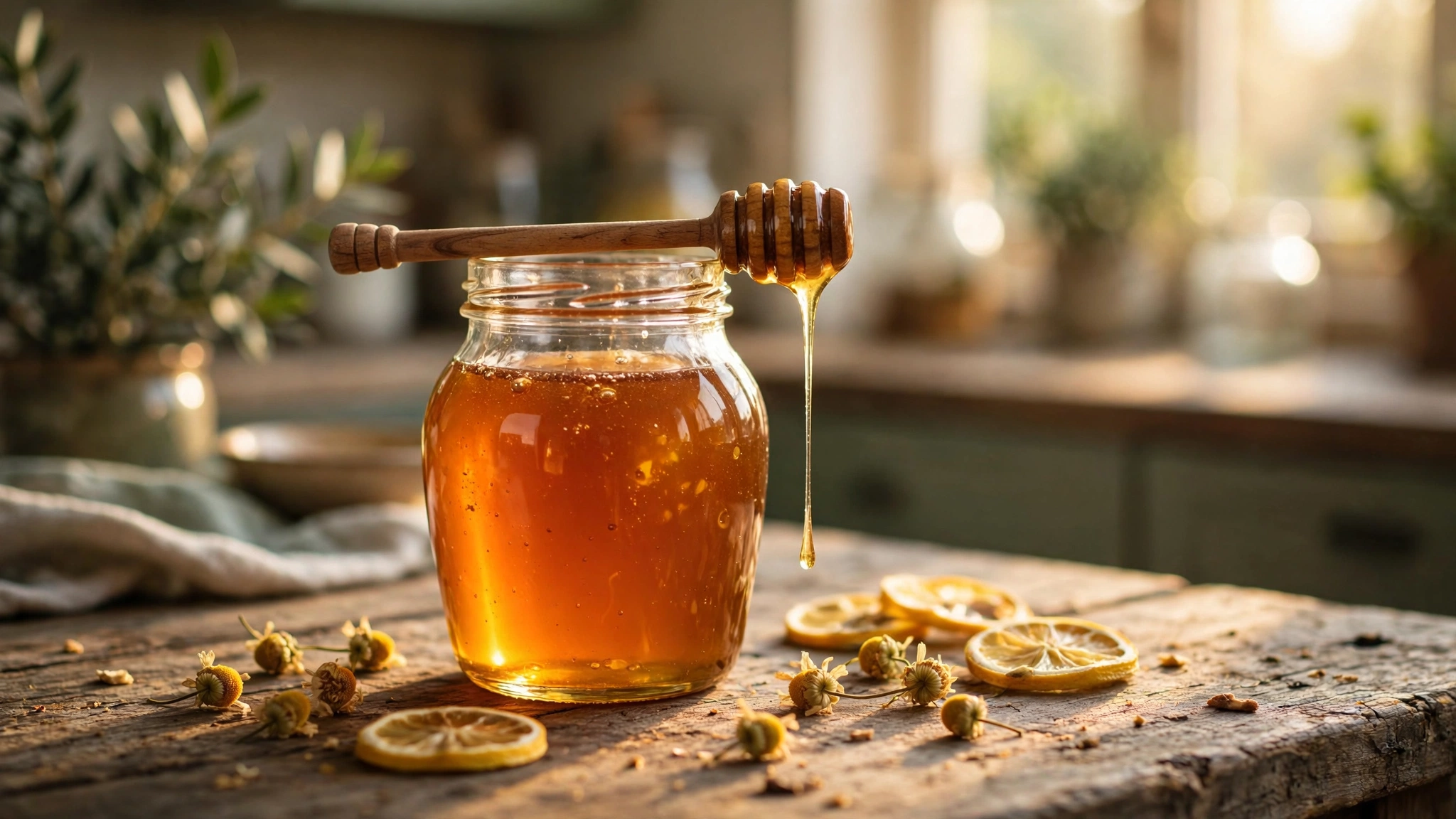
The Prescription Reflex
Upper respiratory infections account for more primary care visits than any other condition. They are also overwhelmingly viral, with bacteria causing fewer than 10% of cases, which means antibiotics — designed to kill bacteria, not viruses — have no therapeutic effect on the vast majority of colds and coughs that bring patients through the door. Yet estimates from the CDC and the European Centre for Disease Prevention and Control suggest that antibiotics are prescribed in 30 to 50 percent of these consultations across the developed world. In the United States alone, that represents tens of millions of unnecessary prescriptions every year, each one feeding the global crisis of antimicrobial resistance.
Meanwhile, the remedy that has been used for millennia sits in most kitchen cabinets, dismissed by clinicians as "folk medicine" — a label that functions less as a description than as a quiet way of marking something as unserious and pre-scientific, something that modern pharmacology has supposedly moved beyond.
In 2020, three researchers at the University of Oxford set out to test that assumption by analyzing every randomized controlled trial comparing honey against standard treatments for upper respiratory symptoms, and what they found upended the hierarchy: honey was not merely as effective as the pharmacy options but measurably superior to them across multiple symptom dimensions.
What 14 Trials Showed
Hibatullah Abuelgasim, Charlotte Albury, and Joseph Lee searched eight medical databases and identified 1,345 unique records. Fourteen randomized controlled trials met their inclusion criteria, involving 1,761 patients across multiple countries. The trials compared honey against a range of "usual care" interventions: over-the-counter antihistamines like diphenhydramine, cough suppressants like dextromethorphan, antibiotics, and no treatment at all.
The pooled results were striking, with honey reducing cough frequency by a standardized mean difference of −0.36 (95% CI −0.50 to −0.21) and cough severity by −0.44 (95% CI −0.64 to −0.25), while the combined symptom score showed a mean difference of −3.96 (95% CI −5.42 to −2.51) with zero heterogeneity between studies. In clinical terms, honey shortened the average infection duration by roughly two days and reduced coughing episodes by about a third.
Subgroup analysis sharpened the picture, with honey performing roughly as well as dextromethorphan (the active ingredient in most over-the-counter cough syrups) and significantly better than diphenhydramine.
The Oxford findings did not arrive in isolation. A Cochrane review by Olabisi Oduwole and colleagues, updated in 2018, independently concluded that honey "probably relieves cough symptoms to a greater extent than no treatment, diphenhydramine, and placebo" in children. On the strength of converging evidence, the UK's National Institute for Health and Care Excellence now recommends honey as a first-line treatment for acute cough. The World Health Organization lists it as a demulcent for cough relief. Grandmother's remedy became clinical guideline.
The Mechanisms Are Surprisingly Straightforward
Honey contains hydrogen peroxide, a well-established antimicrobial compound, alongside flavonoids and phenolic acids with anti-inflammatory properties. Its viscosity coats the throat, forming a protective layer that soothes irritated tissue and suppresses the cough reflex, while its high sugar content triggers salivation that thins mucus and lubricates the upper airway.
The question is not why honey works but why medicine took so long to notice, and part of the answer lies in the economics of evidence: pharmaceutical companies fund trials of pharmaceutical products, nobody patents honey, and a 2013 study in BMJ Open found that patients who received antibiotics for respiratory infections reported higher satisfaction even when the drugs provided zero clinical benefit, meaning the prescription creates an illusion of intervention that a jar of honey, looking less like medicine than like something you put on toast, cannot replicate.
The Strongest Case Against
The most substantive criticism of the Oxford meta-analysis concerns blinding, because honey has a distinctive taste, color, and viscosity, and most trials in the review compared it against treatments that look and taste nothing like it, meaning patients always knew what they were taking. In only two of the 14 studies was honey compared against a true placebo, and that comparison (SMD −0.63, 95% CI −1.44 to 0.18, I²=91%) did not reach statistical significance, with the confidence interval crossing zero and the heterogeneity between those two studies reaching extreme levels.
This opens a real possibility that honey's measured advantage over usual care may partly reflect placebo and expectation effects rather than pharmacological superiority, with parents administering warm, sweet syrup to a sick child at bedtime potentially perceiving improvement that is not fully there because the soothing ritual itself does its own work on distress and discomfort.
The objection deserves its full weight, but it also has limits. The effects on cough frequency and severity against active comparators held with near-zero heterogeneity, the Cochrane review reached similar conclusions under conservative assumptions, and even if the effect is partly psychological, a treatment that reliably reduces symptom burden without breeding antibiotic resistance or producing significant side effects remains worth prescribing. The clinical question is not whether honey's mechanism is pharmacologically pure but whether patients do better with it than without it, and the answer across 14 trials and two independent systematic reviews appears to be yes.
What We Didn't Prove
The Oxford review's 14 trials varied in quality, with overall risk of bias assessed as moderate, and most studies focused on children, leaving the direct evidence for adults considerably thinner than the headlines suggest. Honey type, dosage, and administration differed across trials, and whether Manuka honey outperforms clover honey or two teaspoons outperform one remains unstudied at the scale needed for confident recommendations. A 2024 review in Frontiers in Nutrition noted that almost none of the included trials characterized their honey's botanical origin or biological activity, making it difficult to identify which specific properties drive the clinical effects.
One safety limitation is non-negotiable: honey must never be given to children under one year of age, because infant botulism, caused by Clostridium botulinum spores that mature immune systems neutralize but infant guts cannot, is a potentially fatal condition that is well-documented and prominently flagged in every clinical guideline recommending honey for cough.
The Bottom Line
Honey relieves cough and cold symptoms at least as well as, and by most measures better than, the over-the-counter medications and antibiotics that doctors prescribe for conditions those drugs cannot treat. The evidence comes from 14 randomized trials and two independent systematic reviews, codified into clinical guidelines by both NICE and the WHO. For a condition that drives millions of antibiotic prescriptions accelerating a crisis projected to kill 10 million annually by 2050, the rational first-line treatment costs four dollars and sits in most pantries.
What You Can Do
For adults and children over one year old, try one to two teaspoons of honey at the onset of a cold or cough, particularly before bed when symptoms tend to worsen. Do not give honey to infants under 12 months. If symptoms persist beyond 10 days, worsen significantly, or include high fever, seek medical attention to rule out bacterial infection. When you visit a doctor for a standard cold, do not request antibiotics, because they will not help and the resistance they breed may one day mean the difference between a treatable infection and a fatal one.